Jakob Foster · 15 October 2026
Preserving Legacy File Formats in Isolated Personal Repositories Maintained Without Institutional Support
Legacy file formats continue to present preservation challenges for individuals who maintain personal repositories without access to institutional resources, and researchers have documented cases where data becomes inaccessible due to format obsolescence and lack of compatible software. Those who operate such repositories often work with formats including early Microsoft Word documents, TIFF images from the 1990s, and audio files encoded in now-uncommon codecs. According to data from the Library of Congress digital preservation guidelines, many of these formats require specific migration paths to remain readable over decades.
Core Technical Challenges in Format Longevity
Bit rot and media degradation affect physical carriers such as optical discs and older hard drives, while software dependencies create additional barriers because proprietary applications from previous eras no longer receive updates. Experts note that isolated operators must identify file signatures manually when automated tools fail to recognize container formats like early AVI variants or legacy PDF versions. Studies from Library and Archives Canada indicate that personal collections frequently contain mixed media where a single folder holds both plain text and binary-encoded data, complicating automated validation processes.
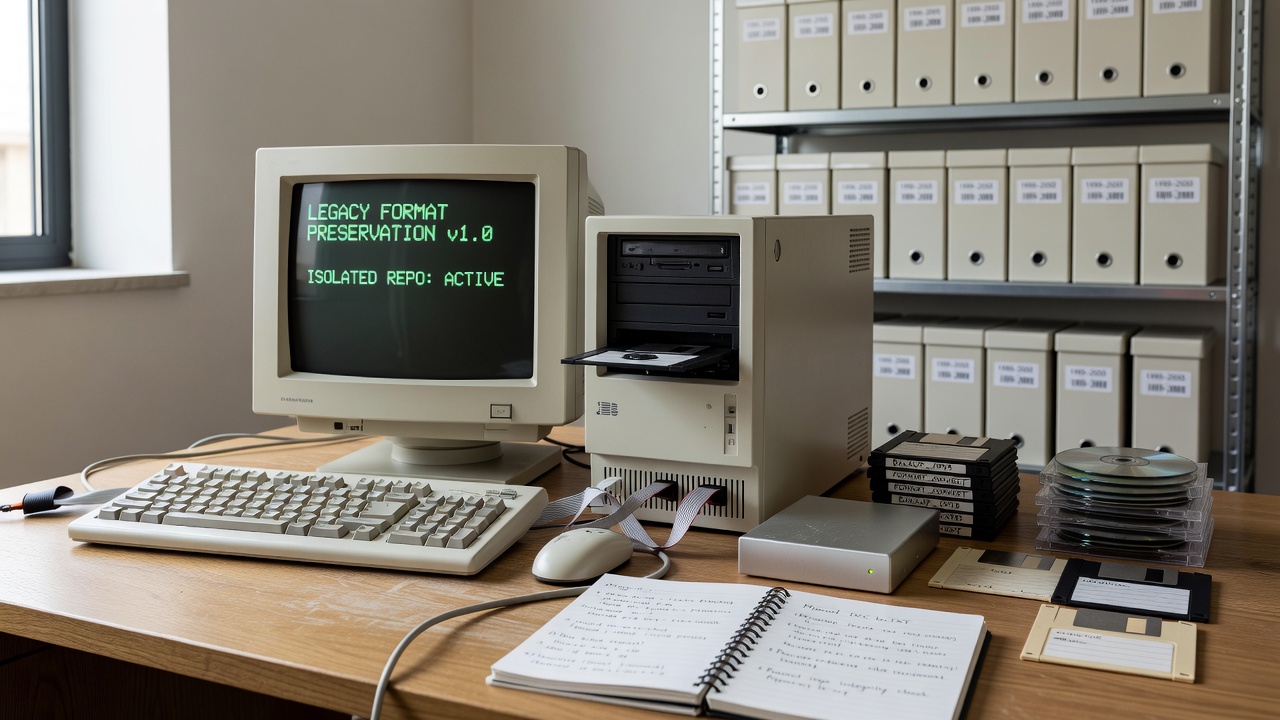
Hardware obsolescence compounds these issues because connectors and interfaces from earlier computing eras become unavailable in consumer markets. Individuals therefore rely on adapters and virtual machine environments to access content stored on SCSI drives or Zip disks. Data shows that successful recovery rates drop significantly when original hardware is absent and documentation for the original encoding methods is incomplete.
Practical Methods for Independent Operators
Migration to contemporary container formats represents one established approach, yet it requires careful validation to avoid data loss during conversion. Tools such as JHOVE and DROID allow verification of file integrity before and after transformation, and observers report that combining these utilities with checksum comparisons provides a reliable workflow. Emulation environments offer an alternative route because they recreate the original software context without altering the source files, and researchers have tested setups using open-source projects that support discontinued operating systems.
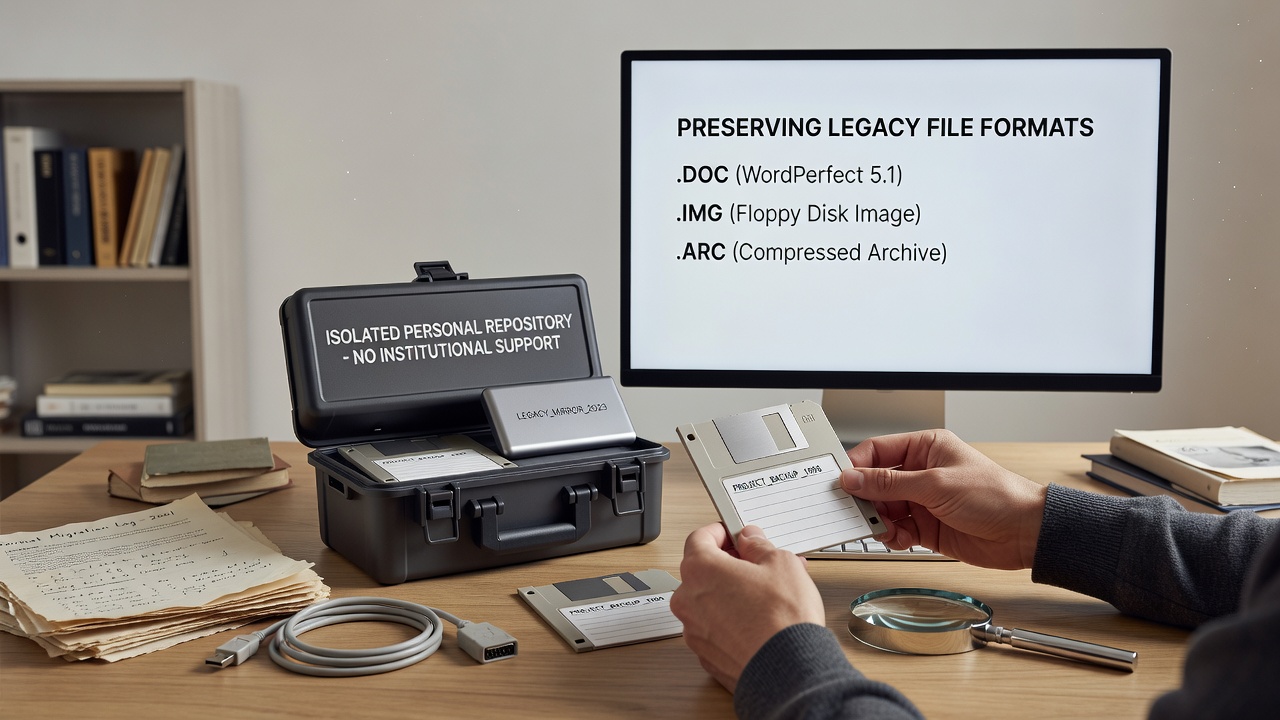
Metadata documentation remains essential because future users need contextual information about creation dates, original applications, and intended rendering environments. Those maintaining isolated repositories often create accompanying text files or structured XML records that describe each legacy item, and evidence suggests this practice reduces interpretation errors when files are accessed years later. In October 2026, planned enhancements to certain open-source emulation frameworks are expected to improve compatibility with additional legacy audio and video codecs, giving independent operators new options for testing without external funding.
Examples from Real-World Personal Collections
One documented case involved an individual who recovered engineering drawings saved in a proprietary CAD format from the late 1980s by constructing a virtualized environment that matched the original workstation specifications. Another instance showed how a collection of scanned photographic negatives stored as uncompressed raster files remained intact after migration to a standardized TIFF profile with embedded color profiles. These examples illustrate that systematic testing and incremental documentation allow continued access even when institutional support is unavailable.
Long-Term Monitoring and Risk Assessment
Regular integrity checks using automated scripts help detect corruption before it spreads across an entire repository, and individuals frequently schedule quarterly reviews of checksum databases. Risk assessment frameworks developed by independent practitioners emphasize tracking software end-of-life announcements because they signal upcoming format support gaps. Figures from academic preservation studies reveal that proactive monitoring reduces the incidence of unrecoverable files compared with reactive approaches that begin only after access failures occur.
Conclusion
Preservation of legacy file formats in unsupported personal repositories depends on consistent application of migration, emulation, and documentation techniques. Available evidence demonstrates that individuals who implement structured verification procedures maintain higher levels of data accessibility over extended periods. Continued development of open tools and scheduled framework updates provide additional pathways for those operating outside institutional structures.