
Dana Lorenz · 1 October 2026
Exploring Metadata Layering Techniques for Personal Digital Collections Maintained by Independent Operators
Independent operators who maintain personal digital collections rely on metadata layering techniques to organize files such as photographs, documents, audio recordings, and video assets without depending on large institutional systems, and these methods build successive levels of descriptive, technical, and administrative information that remain accessible over time. Data from the Library of Congress indicates that layered approaches allow operators to embed core identifiers first, then add rights information, and finally attach contextual annotations while preserving the original file integrity. Researchers have observed that this sequential process reduces retrieval errors when collections grow beyond a few thousand items, because each layer operates independently yet references the others through unique identifiers.
Core Principles of Metadata Layering
Metadata layering begins with a base layer that captures essential file properties such as format, creation date, and checksum values, after which additional layers introduce subject headings, geographic coordinates, and usage restrictions that connect to external vocabularies. Operators often combine Dublin Core elements with PREMIS preservation metadata so that technical details remain separate from descriptive content, and this separation enables updates to one layer without disturbing the others. Studies from the National Archives of Australia show that collections using at least three distinct layers experience fewer migration failures during format transitions because the administrative layer can be revised independently when policies change.
Practical Implementation Methods
Many independent operators start by embedding lightweight metadata directly into file headers using standards such as IPTC for images or EXIF extensions for camera data, then export the same information into separate JSON-LD sidecar files that support richer semantic relationships. This dual approach keeps essential details portable while allowing complex queries across an entire collection through linked data structures. Those who manage mixed-media archives frequently adopt RDF-based layering so that a single resource can carry multiple descriptive contexts, for instance linking a photograph to both its original event and later research annotations without duplicating the image file itself.
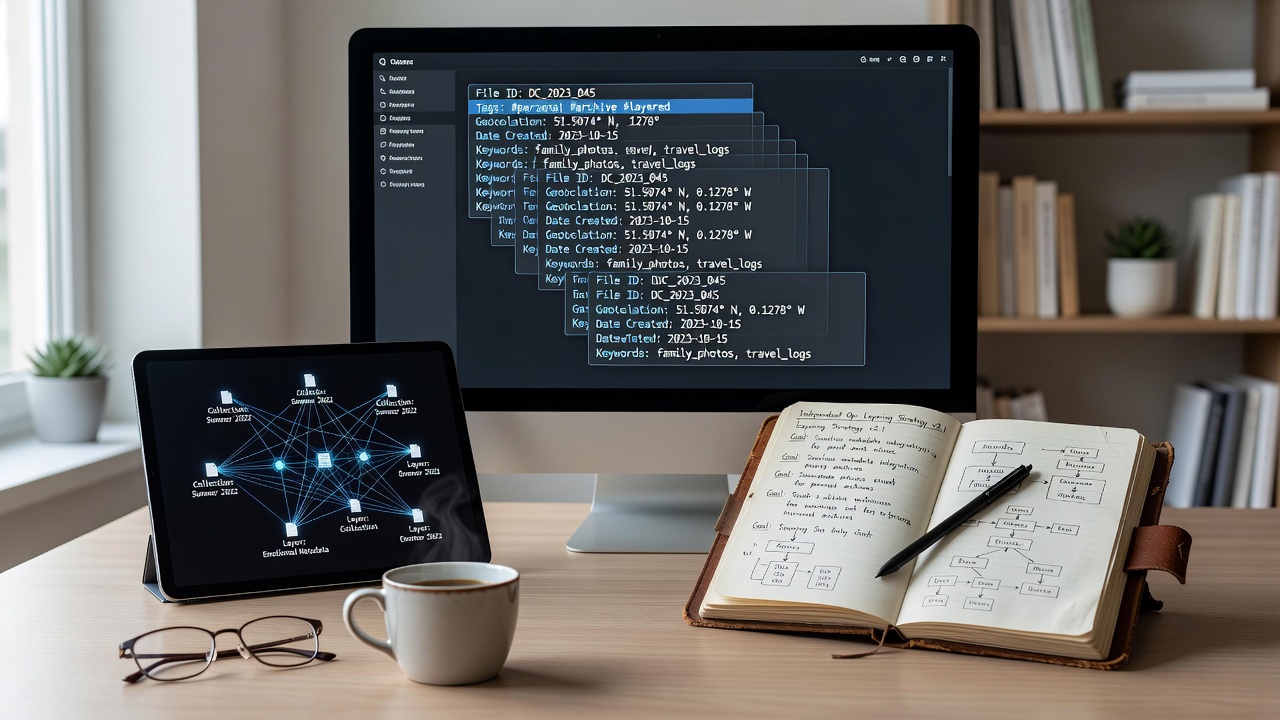
Software tools commonly used include open-source utilities that read and write XMP packets alongside database-driven systems that track provenance across layers, and these solutions scale from a few hundred files to larger personal repositories. Operators report that maintaining a consistent identifier scheme across layers prevents broken references when files move between storage devices or when collections are shared with collaborators.
Standards and Emerging Developments
Current practice draws on established schemas including MODS for bibliographic detail and METS for structural mapping, yet independent operators increasingly experiment with extensions that accommodate personal notes and custom taxonomies. In October 2026 several working groups plan to release updated guidelines for embedding preservation metadata in common consumer formats, which will affect how operators handle newer camera and smartphone outputs. Figures from recent academic reports reveal that collections incorporating these extensions maintain higher long-term accessibility rates during hardware upgrades because the layered metadata travels with the files rather than remaining locked in proprietary databases.
Geographic and disciplinary variations also influence layering choices, with some operators in Europe favoring Europeana data models while others in North America prioritize Library of Congress authorities for subject terms. The flexibility of layered systems allows operators to adopt whichever controlled vocabulary best fits their material without rebuilding the entire collection structure.
Conclusion
Metadata layering techniques provide independent operators with structured ways to manage growing personal digital collections through successive, independent information layers that support description, preservation, and retrieval. Evidence from multiple national archives and standards bodies demonstrates that these methods improve file longevity and query accuracy when applied consistently across formats and platforms. As updates scheduled for October 2026 introduce new embedding options, operators who already maintain layered systems will be positioned to integrate changes with minimal disruption to existing workflows.